Humprt Pum

Humprt Pum

Humprt Pumpa


4 body

Moje komentáře

od nejnovějšíchpodle abecedypodle hodnocenípodle roku vzniku filmu
<< předchozí 1 2 3 4 5 6 8
    • 12.10.2011  02:50
    Drive (2011)
    ****

    Dlouho jsem váhal, jestli tři hvězdy, anebo čtyři. Jakoby mě zevnitř našeptával trpasličí hlásek, že to nemá dostatečnou hloubku, že vlastně myšlenka veškerá žádná, že téma je ohraný a nic do života nedá... Přesto jsem nakonec skončil na čtyřech hvězdách, protože Drive je něčím vlastně dokonalej. Kdyby film mohl být zahřátým medem, pak je tím medem právě Drive. Představte si med, jak v poklidu teče, je hustej, voňavej, barví světlo do oranžova... Rafinovaná vláčnost je pro tohle dílko charakteristická.
    • 12.10.2011  02:41
    Pina (2011)
    ***

    Ačkoli je dokument Pina pojatej originálně a je krásnou sondou do tanečních kreací Pina Bausch, přesto se z toho filmově dalo vytěžit mnohem víc. Ale vzhledem k famózním choreografiím je to stejně vedlejší. Rozervanej tanec pod taktovkou Pina Bausch je nezapomenutelným zážitkem. Vlastní výběr scén nemá chybu, za to Wimovi velkej dík.
    • 19.1.2011  02:15
    Tulpan (2008)
    *****

    Takovejm filmům se nedá vyčíst skoro nic.
    • 13.1.2011  02:54
    Černá labuť (2010)
    ***

    Nacpali do toho zbytečně moc a zbytečně pod tlakem.
    • 29.12.2010  23:49
    Machete (2010)
    odpad!

    Dívat se na céčkový filmy, který se točej jako béčkový v domění, že si všichni uvědomí, jak jsou vlastně tou béčkovostí áčkový, na to už fakt nemám.
    • 28.12.2010  22:09
    Nezastavitelný (2010)
    **

    Hezky pěkně po staru.

    • 28.12.2010  00:31
    Tomorrow, When the War Began (2010)
    odpad!

    Krásně nalíčený sexy holky v lese.

    • 27.12.2010  23:34
    Pohřben zaživa (2010)
    *

    Dalo se z toho vytěžit o tolik víc. Škoda.
    • 5.12.2010  14:59
    Hříšné noci (1997)
    *****

    Co záběr to unikátní příběh. Několik kultovních scén, na který nikdy nezapomenu.
    • 29.11.2010  01:05
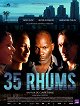
    35 panáků rumu (2008)
    *****

    Konečně zas jednou 100%. Jak málo slov stačí k tomu, aby film promlouval.

    • 27.11.2010  00:24
    Carlos (TV film) (2010)
    **

    Zručně natočenej velkofilm. Ale žádná hloubka, a pořád dokola ty samý řeči.

    • 6.11.2010  00:54
    Království zvěrstev (2010)
    ***

    Nedovedu si představit, že bych na tenhle film někdy vzpomínal, ač je to hodně profi prácička s krásně ponurou atmosférou plnou přetvářky a vnitřního vření.

    • 3.11.2010  00:25
    Trotsky, The (2009)
    *

    Kdyby to nebylo tak groteskně zahraný, mohlo to bejt na dvě hvězdy.

    • 7.9.2010  23:11
    A-Team (2010)
    odpad!

    hi hi hi ha ha ha bum bum tata ta ta...

    • 18.8.2010  22:43
    Expendables: Postradatelní (2010)
    odpad!

    Opravdu neskutečně stupidní reminiscence.

    • 26.3.2010  00:31
    Edith Piaf (2007)
    *

    Tomu, kdo aspoň trochu znal příběh Edith Piaf a poslouchal její zpěv, nemá už tenhle film moc co říct.

    • 5.3.2010  01:21
    Nashville (1975)
    *

    Dobrý film, jen škoda, že se na něj nedá vydržet koukat:-)

    • 24.2.2010  00:05
    Max a maxipříšerky (2009)
    *****

    Absolutně nevídaná záležitost po všech stránkách.

    • 17.2.2010  21:08
    Jasná hvězda (2009)
    **

    Na www.metacritic.com toho času 81%. Z mého pohledu chybí napětí, síla, hloubka, příběh. Dávám 60% a ztotožňuj se s kritikou New York Daily Times. (POZOR - MOŽNÉ SPOILERY) Bright Star. 3 stars. Biographical romance about the poet John Keats and his last love. At area theaters (1:59). PG: Sensuality, mature themes. There's nothing exceptional about Jane Campion's historical biography, but it's a sufficiently lovely tale to suit romantics with a taste for intimate period dramas. Campion's subjects are the 19th century English poet John Keats (Ben Whishaw) and his neighbor, Fanny Brawne (Abbie Cornish). As depicted here, Brawne is a feisty fashionista ahead of her time, while Keats is the dangerously fragile genius who captured her fickle attentions. Cornish offers a vigorous, modern take on the oft-maligned Brawne, while Whishaw is sufficiently sensitive. But the real standout is Paul Schneider. As Keats' cynical best friend, he seems to know that it's not enough to make a static thing of beauty. His edgy wit infuses the movie with a vitality it very much needs. Read more: http://www.nydailynews.com/entertainment/movies/2009/09/18/2009-09-18_short_movie_reviews_bright_star_the_burning_plain_paris_and_more.html#ixzz0fpFnGYPC

    • 11.2.2010  21:06
    Nine (2009)
    odpad!

    Taková škoda. Můj nejoblíbenější herec v takovém trapasu. Na www.metacritic.com toho času 49%. Viz: http://www.metacritic.com/film/titles/nine?q=nine . Shoduji se s kritikou Washington Post By Ann Hornaday (25%). POZOR - SPOILERY. "Nine" bounces into theaters as a bright, shiny bauble of cinematic self-reference and mythologizing, begging so insistently to be loved that it winds up pushing the audience away. Rob Marshall's frantic, fussy adaptation of the Broadway musical -- which itself was an adaptation of a classic film -- suffers all the distortion that its hall-of-mirrors provenance suggests. It's a film within a film about a film within a film, and seems to lose layers of authenticity with each iteration, finally becoming a profoundly alienating experience. "Nine" is about Guido Contini (Daniel Day-Lewis), a legendary Italian filmmaker who in 1965, on the eve of directing his latest picture, finds himself creatively blocked and preoccupied with the women in his life, madonnas and whores alike. An insurmountable flaw of "Nine" is that it asks viewers so blithely to identify with a protagonist whose overwhelming ego, insecurity and selfishness they're meant to confuse with artistic genius. Guido, of course, was invented by Federico Fellini in his 1963 movie "8 1/2 ," a semi-autobiographical reverie on art, sex, obsession and forgiveness. But the characters and material that in Fellini's hands made for such a delicate, funny and self-aware meditation become in "Nine" a meaningless exercise in style for its own sake, whipped by Marshall into a nearly incomprehensible froth. It's a measure of how disjointed the movie is that, when a reel was shown out of order at a recent screening, no one appeared to notice. The grabber about "Nine" is that it stars Nicole Kidman, Penlope Cruz, Marion Cotillard and Kate Hudson, some of the screen's hottest actresses in both meanings of that word. Judi Dench and Sophia Loren are also on hand to lend gravitas, as well as Fergie, the pop-star outlier who delivers one of many brassy, bawdy set pieces, as a prostitute from Guido's past. Where that number goes out of its way to be sexually aggressive, by far the most crassly erotic performance goes to Cruz, who as Guido's mistress sings an ode to carnality using two ropes as the rough analogue to a stripper's pole. Every actress gets her moment, each with a song that is more instantly forgettable than the last. In "Chicago" and "Dreamgirls," Marshall proved that he doesn't know how to film dancers, compulsively cutting away from movement rather than letting it play. Oddly, Marshall's edit-happy style matters less with "Nine," which doesn't feature dancing so much as metrically timed writhing, stomping, sashaying and posing. (The "Glee" kids would call it "hairography.") Day-Lewis's singing voice is undistinguished, but his spoken voice, with its silken lower registers, is seductively musical; still, he can't imbue much interest in a portrait of the artist as a raging -- and aging -- narcissist. Of all his gorgeous co-stars, Cotillard alone delivers something that resembles a true performance, in a smoldering, heartbreaking turn as Guido's long-suffering wife. Cotillard's moments slow the proceedings a bit, inviting viewers to contemplate a fleeting view of genuine human vulnerability. As for the rest of "Nine," it's crammed and crazy and ultimately kind of craven, baiting filmgoers with star power and showstoppers and delivering little more than pastiche. Here's an idea: To experience all the joys of "Nine," do yourself a favor and rent "8 1/2 " and "All That Jazz." Pop some popcorn, plump up the couch cushions and settle in for a delicious, dazzling night at the movies. http://www.washingtonpost.com/gog/movies/nine,1158912/critic-review.html#reviewNum1

    • 21.1.2010  23:00
    Nae meori sogui jiugae (2004)
    ****

    Krása. Jen trošku moc šlehačky.

    • 21.1.2010  22:58
    Sherlock Holmes (2009)
    ****

    Vůbec jsem tomu filmu nevěřil a netěšil se na něj ani trochu. O to víc jsem valil bulvy. Bravurně natočený, perfektní střih, parádní režie i herci. Čistokrevná zábava.

    • 8.1.2010  23:38
    Precious (2009)
    ****

    Citlivě natočený drama.

    • 8.1.2010  02:38
    Twilight sága: Nový měsíc (2009)
    odpad!

    Krásná holka a kucí v kraťasech, který běhaj po lese a loupou sexy okama.

    • 8.1.2010  02:31
    Mučedníci (2008)
    *

    Dvě nádherný francouzský holky v tílkách a krvi. Slušně zrežírovaný, slušně sestřihaný, slušně zahraný... jen je to celý o ničem a stačilo by pro zasmátí 5 minut.

    • 7.1.2010  00:38
    Něco na těch mužích je (2009)
    odpad!

    Brrrr. Na www.metacritic.com 44%. Nestojí za řeč.

    • 7.1.2010  00:31
    Lítám v tom (2009)
    ***

    Škoda, že to skončilo tak typicky.

    • 7.1.2010  00:24
    Collapse (2009)
    *****

    Ať už je pravda kdekoli, tohle by měl vidět každej. Můžeme přitom na Rupperta nadávat, klepat si na čelo, nebo souhlasně přikyvovat s popcornem v puse, hlavně když nás to donutí aspoň trochu přemýšlet.

    • 7.1.2010  00:20
    Píseň lásky samotářky (2004)
    **

    Snad jen kvůli Travoltovi se to dá tahle pseudofilozofující slátanina skouknout, i když ani Travolta neexceluje. Ale je fajn. Na www.metacritic.com toho času 48%. Shoduji se s následující kritikou z Washington Post: In "A Love Song for Bobby Long," John Travolta sets off on the journey from movie star to character actor, a treacherous venture undertaken by many a middle-aged Heartthrob facing the great, gaping What Comes After. Travolta plays the title character, a dissipated former professor who, as the movie opens, buys a bottle of liquor and imbibes it while shuffling through the streets of New Orleans on his way to a funeral. Wearing a Panama hat, chain-smoking cigarettes, promiscuously quoting Frost and Dickens (and Woody Allen, who goes uncredited for "I'll walk to the curb from here"), Long is a painfully familiar character -- the boozy, hyper-literate philosopher king of Nawlins, a literary and cinematic stereotype long past due for retirement. Scarlett Johansson and John Travolta in "A Love Song for Bobby Long," which drowns in every cliche of the "colorful" South, including its overripe dialogue. (Ron Phillips) "A Love Song for Bobby Long," which was adapted by Shainee Gabel from a novel by Ronald Everett Capps, traffics in nearly every trite cliche of the "colorful" South one can think of, from its pseudo-Gothic aesthetic to its overripe dialogue. The movie co-stars Scarlett Johansson as a teenager who inherits the house Long has been living in for several years; her chief quirk, other than that she lives in a trailer, is that she eats spoonfuls of peanut butter dipped in M&M's and still looks like Scarlett Johansson. Gabriel Macht plays Long's best friend and roommate, a struggling novelist who narrates the story of how the three come to live together and (heaven help us) heal each other's psychic wounds. Johansson's and Macht's characters, by the way, have been given the names Purslane Hominy Will and Lawson Pines, monikers that provide ample evidence of the preciousness that oozes through this film at every gerund-droppin' turn. Johansson is gorgeous, but she seems too old, too worldly, for the role; Macht is handsome enough to be plausible as her romantic interest. But "A Love Song for Bobby Long" is clearly Travolta's movie, and his pitch to be considered more than just a charismatic concoction of blue eyes, a dimpled chin and animal magnetism. That pitch fails, in part because he's chosen to play caricature rather than a fully realized character, in part because his star quality keeps peeking through. Try as he might to disappear under dyed white hair, a stoop and a day's stubble, he's still Travolta. And there ain't nuthin' wrong with that. http://www.washingtonpost.com/wp-dyn/articles/A43111-2005Jan27.html

    • 7.1.2010  00:14
    Bronson (2008)
    *

    No ano, byl agresivní, "a co má bejt"? Hodnocení na www.metacritic.com toho času 71%. Shoduji se s následující kritikou z Globe and Mail (POZOR - SPOILERY): Bronson: All punch, no poetry. All show, no tell Dubbed “Britain's most violent prisoner,” Charles Bronson – born Michael Peterson – has spent 34 of his 56 years in jail, most of them at his current address in solitary confinement. He has also published 11 books, won a like number of awards for his painting and drawing, and possesses a lethally fit body capable of “regularly performing 2,500 pushups a day.” That's quite the résumé and, all things considered, should make for quite a movie. But it doesn't. Instead, Bronson is one of those “based on a true story” dramatizations where the theatrically staged drama only gets in the way of the more interesting truth. Blame that on writer/director Nicolas Winding Refn, who keeps imposing himself on the subject, yet seems unsure what to make either of Peterson or his narrative. Is this a tale of innate violence? Or obsessive celebrity? Or frustrated artistry? All these themes pop up, yet only superficially and, as they do, the scary yet intriguing figure at the centre goes missing in the mayhem. Consequently, we never really learn much about a guy who interests us but who remains a frustrating cipher. We do, however, learn more than we care to know about Refn's operatic style. That style begins, continues and ends with the same recurring sequence: The skin-headed, ultra-muscled Peterson naked in a cell and single-handedly fighting a truncheon-wielding crowd of prison guards. Getting in his licks while getting the bejabbers beaten out of him, he appears to be enjoying himself immensely. To encourage us to do the same, Refn swipes a chord from A Clockwork Orange and choreographs the fisticuffs to a symphonic score. Yes, the violence is aestheticized and made lyrical, apparently because that's how the pugilist sees it – as performance art. His body is his canvas, and blood his palette. But why? Well, a token flashback to the seventies reveals little about his wayward youth, beyond the fact that he routinely pounded out teachers, then got convicted of armed robbery and sent behind bars. There, he took an instant liking to the place. “Prison was where I could sharpen my skills, own my tools,” says Peterson to the camera. He often addresses us directly; sometimes, he's also seen in a small theatre addressing an actual audience, literally putting the performance into his art. The picture is nothing if not elaborately staged, yet the effect is just so stagy – all show and no tell. What keeps us watching is Tom Hardy's tour de force in the title role. Physically buffed and brutal, verbally blunt and caustic, he makes menace mesmerizing, the interior rage pouring out to seek its violent expression. In Hardy's bruised hands, Peterson is a natural born fighter in constant search of a ring. No wonder he escapes into prison, where the vicious atmosphere perfectly suits his needs. No wonder too that the authorities are “at a loss” about how to deal with him – after all, every other inmate's punishment is his reward. But ultimately, the director (who showcased his own violent obsessions in the Pusher trilogy) undermines his lead actor by depriving him of the complexity that presumably led the real-life Peterson to write his poetry and produce his drawings. Perhaps Refn is afraid of the cliché: Certainly, from Birdman of Alcatraz onward, the screen has seen its trite share of the hardened-con-as-sensitive-artist prototype. But he errs at the opposite extreme, reducing Michael Peterson exclusively to Charles Bronson, to his assumed street name. Somewhere in that persona lurks a person, yet he stays elusive here. That's because the filmmaker is too busy stripping him down and posing him in that repeated tableau, naked and taking eager swings against unyielding authority, the star player revelling in his blood-sport. Again and again, that's the frame, that's the canvas, that's the art. Too bad the revealed artist is Refn, and not the far more compelling figure we hoped to see. http://www.theglobeandmail.com/news/arts/bronson/article1343944/

<< předchozí 1 2 3 4 5 6 8